ChatGPT vs Claude vs Gemini vs Perplexity: Which AI Should You Actually Use?
5-second Summary
A no-BS breakdown of the 4 biggest AI tools in 2026 — what each one is best at, where they fall short, and which one you should actually use based on your needs.
Everyone's got an opinion on which AI is "the best."
The problem? Most of those opinions are based on vibes, not actual use. Someone tried ChatGPT once in 2024, had a good experience, and now they swear it's the only tool that matters. Meanwhile, Claude quietly became a coding monster, Gemini swallowed all of Google, and Perplexity turned search upside down.
The truth is: there is no single best AI. Each one has a superpower — and a blind spot. The smartest people in 2026 aren't loyal to one tool. They use the right one for the right job.
This guide breaks down exactly what each AI does best, where it falls short, and which one you should actually be using based on how you work.
The Big 4 at a Glance
Before we go deep, here's the quick summary:
Tool | Best For | Weak Spot |
|---|---|---|
ChatGPT | All-rounder, images, plugins, voice | Can be generic, hallucinations |
Claude | Long docs, coding, nuanced writing | No real-time web, smaller ecosystem |
Gemini | Google integration, multimodal, video | Inconsistent quality, privacy concerns |
Perplexity | Research, citations, real-time answers | Not great for creative/long-form tasks |
Now let's break each one down.
ChatGPT — The Swiss Army Knife

ChatGPT is the AI that started it all for most people — and in 2026, it's still the most versatile option on the market.
Where ChatGPT wins:
Image generation — GPT Image is one of the best AI image generators available, built right into the chat
Voice mode — Natural, real-time voice conversations that actually feel useful
Plugin ecosystem — Browse the web, analyze files, run code, connect to apps
General knowledge — It handles 80% of everyday tasks well: emails, brainstorming, summaries, translations
Memory — It remembers your preferences across conversations and gets better over time
Where ChatGPT falls short:
Hallucinations — It still confidently makes things up, especially with niche or recent topics
Generic outputs — Default responses can feel templated. You need to prompt well to get great results
Long documents — It struggles with very long inputs compared to Claude
Depth — For specialized tasks (deep coding, academic research), other tools often outperform it
Best for:
People who want one tool that does everything decently. If you're new to AI or want a daily driver that covers the widest range of tasks, ChatGPT is the safe pick.
Claude — The Thinker

Claude is the AI that power users quietly switched to — and never came back. Made by Anthropic, it's designed to be more careful, more nuanced, and better at handling complexity.
Where Claude wins:
Long context — Claude can process massive documents (200K+ tokens). Upload entire codebases, contracts, or research papers and it actually understands them
Coding — Claude Code is one of the best AI coding tools available. It writes cleaner code, catches more bugs, and understands project structure better than most alternatives
Nuanced writing — It produces less generic, more thoughtful text. Great for strategy docs, analysis, and anything that needs depth
Instruction following — Claude is remarkably good at following complex, multi-step instructions without drifting
Safety + honesty — It's more likely to say "I don't know" than make something up
Where Claude falls short:
No native web browsing — It can't search the internet in real-time (you need to bring the information to it)
Smaller ecosystem — Fewer integrations and plugins compared to ChatGPT
Image generation — No built-in image creation
Speed — Can be slower on complex tasks (but usually more accurate)
Best for:
Developers, writers, and analysts who need depth over breadth. If your work involves long documents, code, or complex reasoning, Claude is probably your best bet.
Gemini — The Google Brain
Gemini is Google's AI — and its biggest advantage is that it lives inside the Google ecosystem. Gmail, Docs, Drive, Search, YouTube, Maps — Gemini touches all of it.
Where Gemini wins:
Google integration — It can read your emails, search your Drive, summarize your Docs, and pull from your calendar. No other AI has this level of native integration with tools most people already use
Multimodal — Gemini handles text, images, audio, and video natively. Upload a video and ask questions about it
Google Search grounding — It can pull real-time information from Google Search, making its answers more current
Veo 3 — Google's video generation model is genuinely impressive for creating short clips
Free tier — Gemini's free version is surprisingly capable
Where Gemini falls short:
Inconsistent quality — Responses can vary wildly. Sometimes brilliant, sometimes bafflingly wrong
Privacy — Using Gemini means feeding more data into Google's ecosystem
Creative writing — Tends to be more corporate and less creative than ChatGPT or Claude
Hallucinations — Still a significant issue, especially when it's confident about wrong facts
Best for:
People deep in the Google ecosystem who want AI woven into their existing workflow. If you live in Gmail, Docs, and Drive, Gemini adds value without changing how you work.
Perplexity — The Researcher

Perplexity isn't trying to be a chatbot. It's trying to replace Google Search — and for a lot of use cases, it's already better.
Where Perplexity wins:
Citations — Every answer comes with sources. You can actually verify what it tells you
Real-time search — It searches the live web and synthesizes results into clear answers
Research depth — Deep Research mode can spend minutes thoroughly investigating a topic and produce comprehensive reports
No hallucination guessing — Because it's grounded in search results, it hallucinates far less than other models
Speed — For factual questions, it's faster and more reliable than asking ChatGPT
Where Perplexity falls short:
Creative tasks — Not the tool for brainstorming, writing stories, or generating ideas
Long-form content — It's a researcher, not a writer. Don't expect polished blog posts
No image generation — It finds images but doesn't create them
Complex reasoning — For multi-step logic or coding, ChatGPT and Claude are better
Best for:
Anyone who needs accurate, sourced information fast. Students, journalists, marketers doing competitive research, founders validating ideas. If your question starts with "What," "When," or "How much" — Perplexity is your first stop.
So Which One Should YOU Use?
Here's the honest answer: it depends on what you're doing.
The best approach in 2026 isn't picking one AI and being loyal to it. It's building a personal AI stack — 2-3 tools that cover your main use cases.
Here are some common stacks:
The Creator Stack
ChatGPT for brainstorming + image generation
Claude for long-form writing + editing
Perplexity for research + fact-checking
The Developer Stack
Claude Code for writing + debugging code
ChatGPT for quick questions + explanations
Perplexity for documentation lookups
The Business Stack
Gemini for email + docs + calendar integration
Perplexity for market research + competitive analysis
ChatGPT for presentations + general tasks
The Student Stack
Perplexity for research with citations
Claude for understanding complex topics + long readings
ChatGPT for study aids + practice problems
The point isn't to use all four every day. It's to know which one to reach for when.
The Real Question
The gap between people who use AI well and people who don't isn't about which AI they picked. It's about whether they have a system for using AI at all.
Knowing that Claude is better for coding or Perplexity is better for research is useful — but only if you're actually using them consistently, building workflows, and leveling up your skills.
That's exactly what most people are missing: not the tools, but the structure.
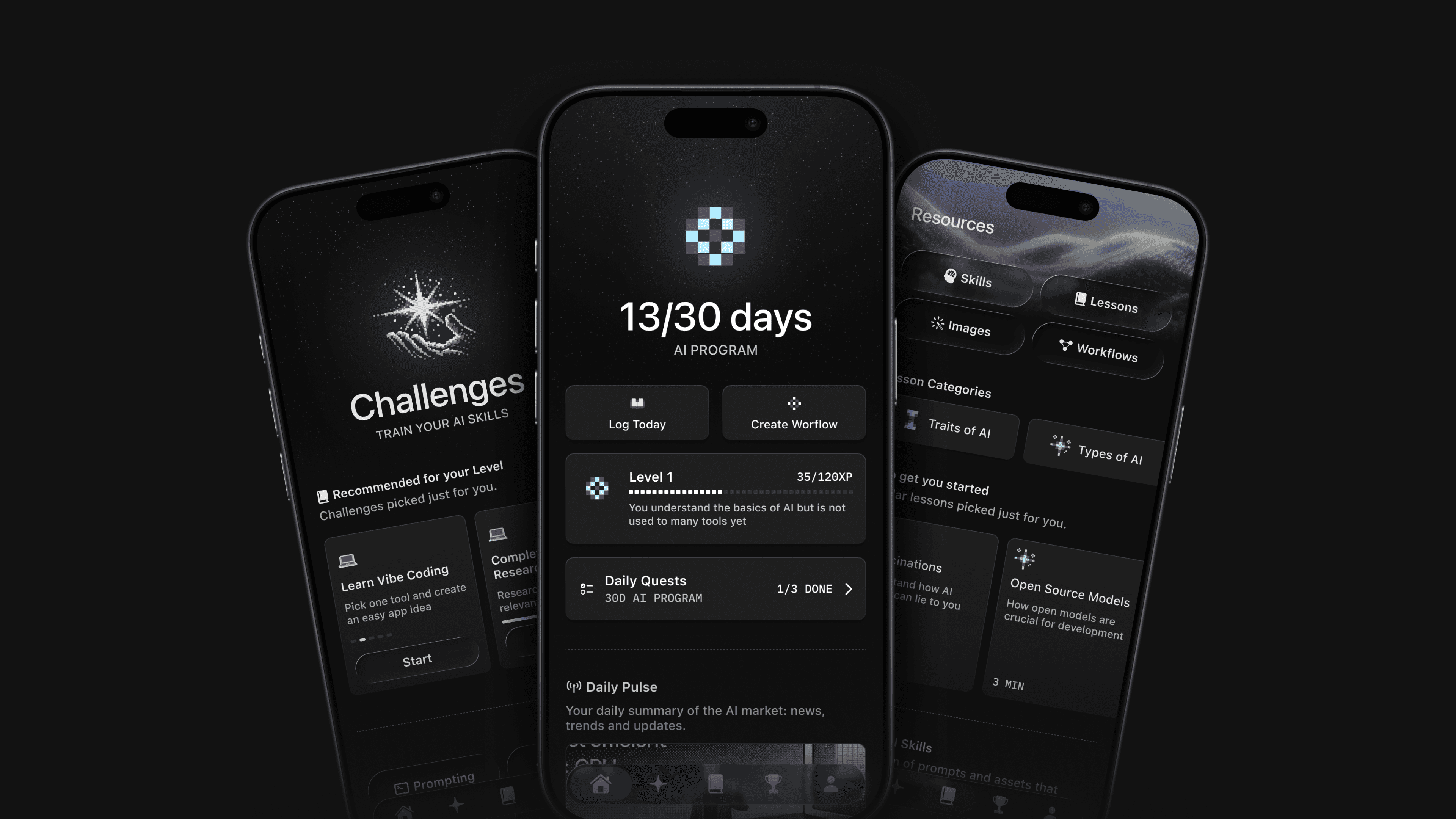
Disparity gives you that structure. It diagnoses your current AI level, builds a personalized 30-day challenge with daily tasks, tracks your streak, rates 60+ tools, and teaches you the right skills in order — so you stop guessing and start compounding.
Published on
Pedro Schott
Writer at Disparity